Sometimes People March
By Tessa Allen
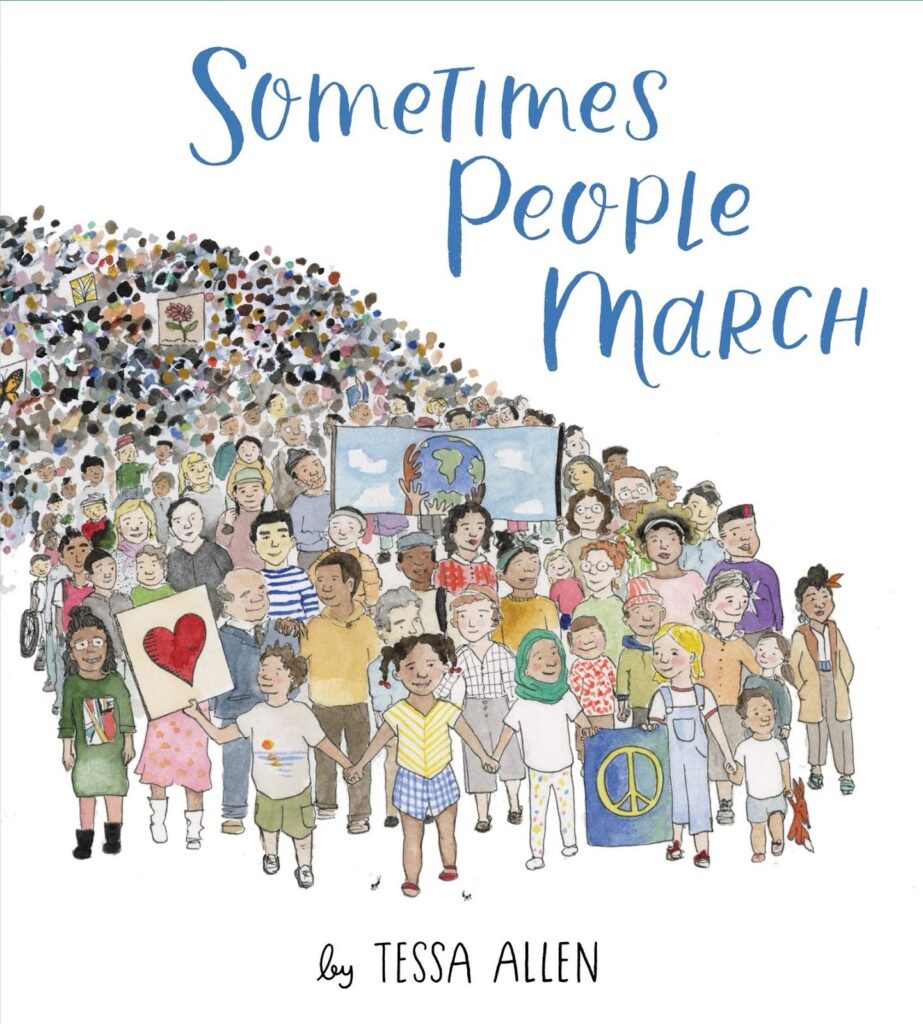
Marching, resistance and advocacy has not always been the messaging we have given to young children, but more and more (thank goodness) these important issues are creeping into children’s literature and I am grateful. This topic becomes relatable and engaging when the author relates to ants and bands marching, how when we march together we are louder and stronger. Why do we march? Perhaps to resist injustices, when we notice the need for a change or to show what we care about.
People march for their earth, for the people they love, the freedom to love and live and learn. Resistance is shown through our words, our positive actions, our “peaceful yet meaningful protest”. We may not be comfortable with the concepts of children making demands, advocating for change, standing up for what they believe is right but I believe in giving children that voice. We should not only be allowing children to protest, march, resist but we should be encouraging. I think we can honestly say that our world is in desperate need of voices, of change, of creative thoughts and positive expression. Who’s to say that those voices should not be those of our children? Resistance can be positive through the uplifting of voices, art, standing up, sitting down or taking a knee: It is not in its nature a negative.
This book also gives us examples of resistance, from the Civil Rights movement to the Black Lives Matter movement and the Women’s March of 2017. I strongly recommend this book for children beginning as young as 3 and into the early grade school years. Please check it out. https://bookshop.org/a/104412/9780062991188
“If you are neutral in situations of injustice, you have chosen the side of the oppressor. If an elephant had its foot on the tail of a mouse and you say that you are neutral, the mouse will not appreciate your neutrality” – Archbishop Desmond Tutu
